
I am employed at a drill pipe factory. So if a customer calls me and says, “Your drill pipe is junk,” I’m supposed to get excited and start writing a quote? I don’t. Because after five years in trenchless drilling I’ve learned that a lot of “drill pipe problems” are actually mud problems.
This spring I got a call from a contractor running a Vermeer D40x55.
He was a hottie. “We’re burning pipe, surging the pump, and the hole is continually caving. I drove to the job site. The rig looked good The drill pipe looked ok. The mud? Oh boy.
They had a little tank, an old venturi hopper, and two guys throwing 50 lb bags of bentonite in like they were feeding ducks. Lumps all over the place. The suction screen was half blocked up. Funnel viscosity was all over the map. They’d mix for 2 minutes and then go drill.
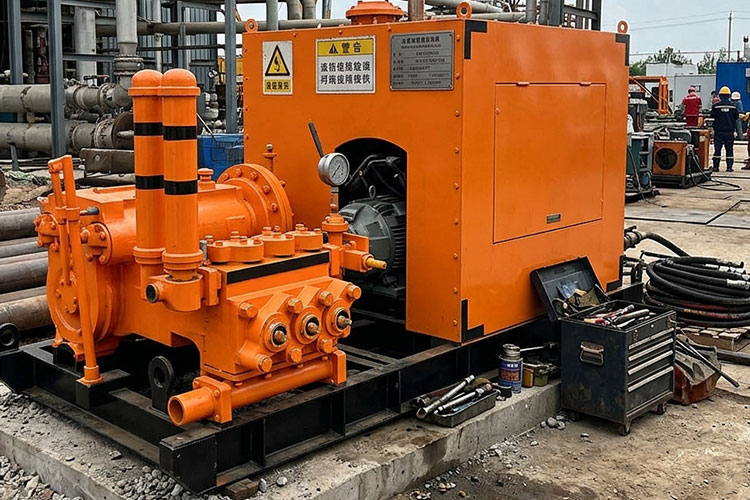
“What’s your pump at?” I asked. He said about 50-60 gpm. I look at that mixing system and go, “15 to 20 gpm on a good day. That was my “aha” moment; the Vermeer rig was ready to drill, but the mud mixing system was still in first grade.
A Vermeer HDD rig is not a luxury with a large capacity mud mixing system. It keeps your rig, your drill pipe, your reamer, your mud motor alive.
What does “high capacity” actually mean? It’s not merely a bigger tank.
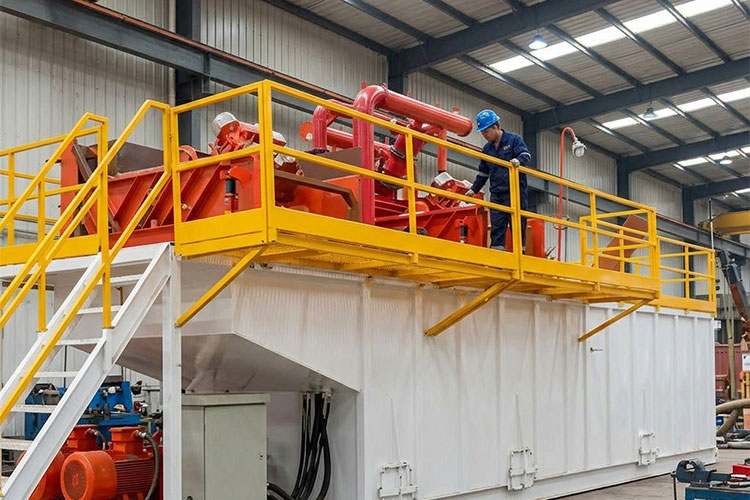
That is, a blending hopper that can wet out bags quickly, with no dust storm or lumpy soup. That means a shear pump or high shear mixer – because bentonite needs hydration and polymer needs shear. A paddle in a tank isn’t going to cut it. It means a tank with sufficient volume and compartments for returns, suction and batch mixing. If your tank is too small you’re constantly in panic mode. That means transfer pumps, jet agitate and plumbing that won’t choke. No nuts elbows. No inaccessible suction lines. And yes, automation is good, but make it good first.
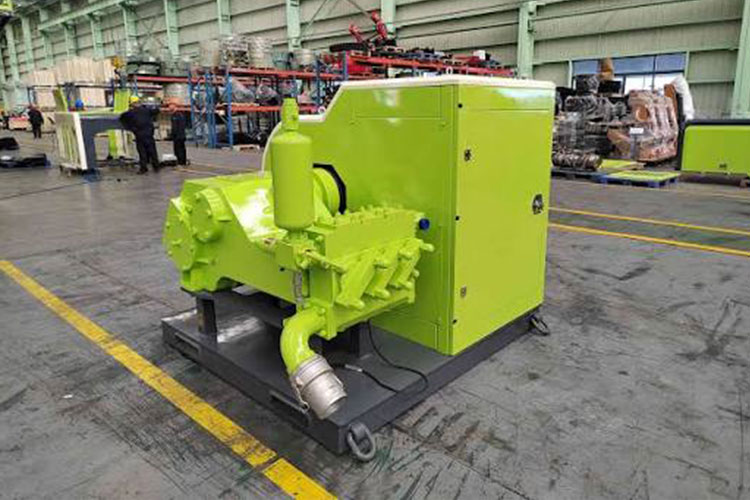
Why is this such a big deal on a Vermeer HDD rig? Vermeer rigs are made to push serious mud volume. If your mixing system can’t keep up, then you get inconsistent mud. Thin, then fat. Lumps. Bad hole cleaning. High torque. pipe stuck. * Drill pipe worn. Tooling has failed. Then you blame the pipe. I understand. I sell drill pipe. But no pipe in the world likes lumpy, inconsistent mud.”
The thing is, the mud is the tool. The tool is the mixing system.
Some practical things I tell my clients:
“Match your mixing rate to the maximum pump flow of your rig. Don’t just measure tank gallons.
Add the bentonite slowly. Soak it. Don’t just dump and pray.
Cut your polymer correctly. Your hole and mud motor will thank you.
Clean the suction screen. I hate paper work. I hate cleaning lumps out of a screen at 5am more.
Check density and viscosity. “Looks good” is not a measure.
Talk to your mud man. If you don’t have one, be one.
If you are running a Vermeer HDD rig – D23x30, D40x55, D60x90, D100x140, you name it – and you’re tired of fighting your mud, send me your rig model, pump flow, tank size and ground conditions. We will help you size a high capacity mud mixing system. And yes, we make drill pipe too. But let’s get the mud fixed first.
Your drill pipe will be grateful. Your crew will appreciate it. Your 3 a.m. self will thank you big time.
More Posts for You
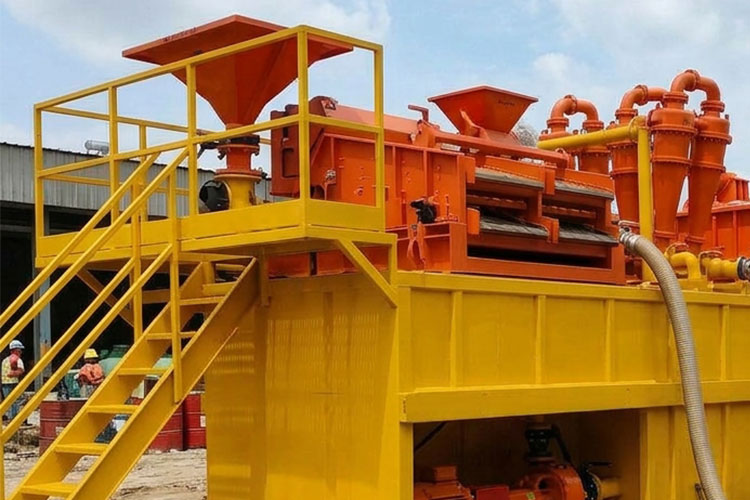
High Capacity Mud Mixing Plant for Vermeer D60x90, D100x140, D220x300 & Ditch Witch JT60, JT100
I have been around HDD drill rods and mud systems long enough to see a…
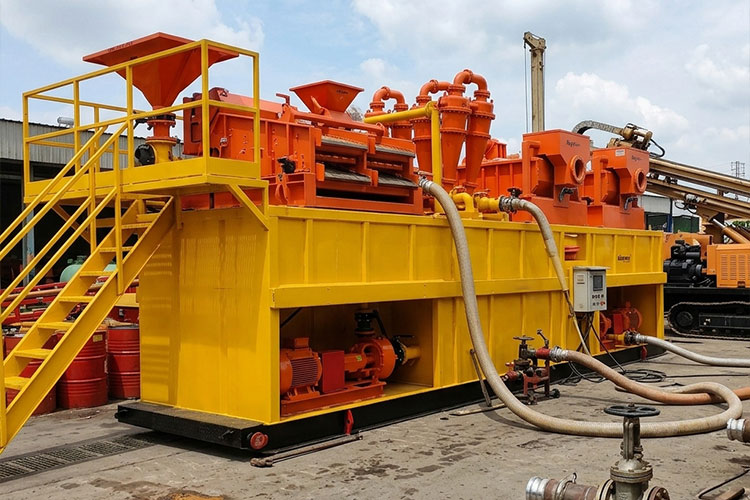
The Mud Pit Was Killing My Weekend (And My Back) – Until I Saw What a Fully Automatic Mixing Unit Does Behind a D40x55 or JT32
Okay, this might sound a little dramatic but hear me out: The most expensive piece…
Fully Automatic HDD Mud Mixing Unit for Vermeer D40x55 Ditch Witch JT32 Directional Drilling Machine
Last spring, I was on a utility job just outside of Columbus, standing next to…